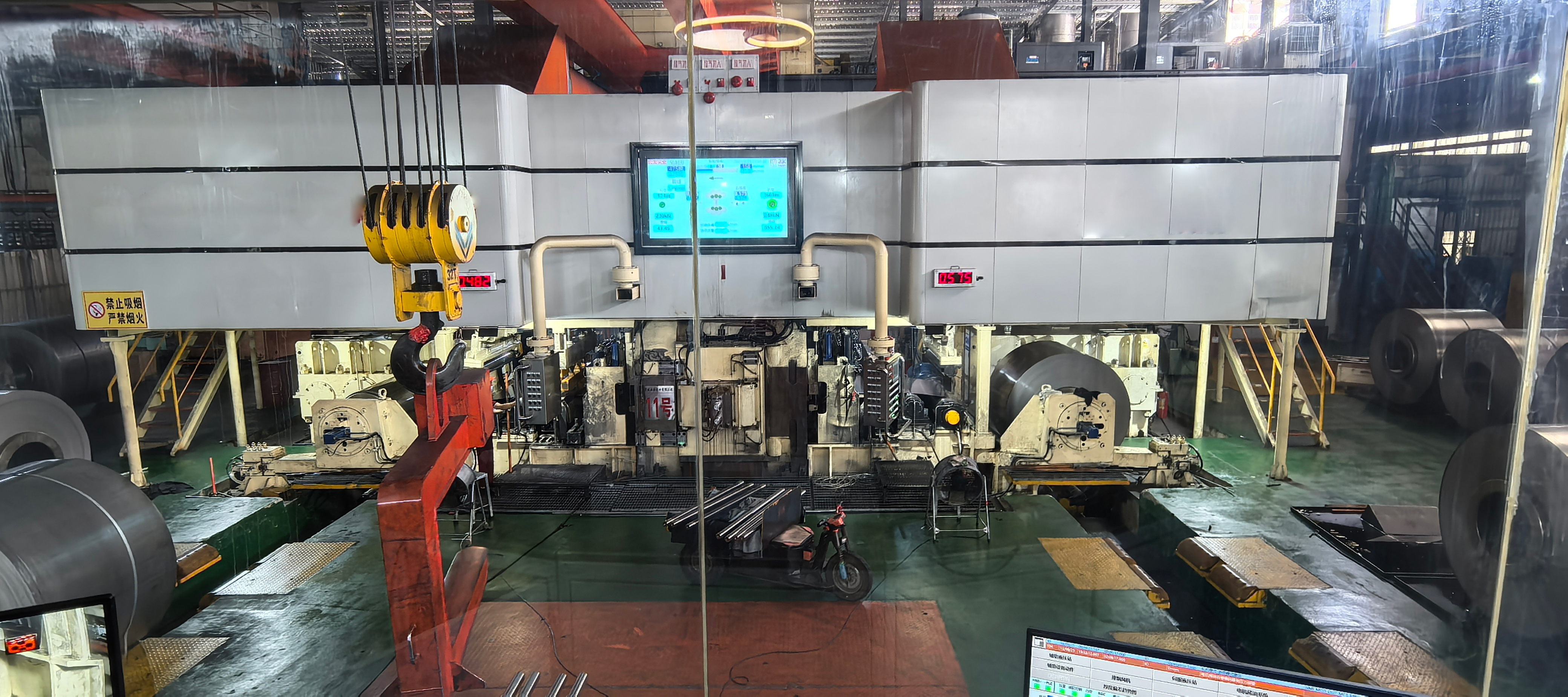
Smart Rolling Mill
Smart rolling mills for energy-saving strip production
JINYE rolling mills are built for stable gauge control, reliable strip tension, intelligent control and data-ready production of stainless steel, silicon steel and carbon steel strip.
Application
Cold reduction equipment matched to grade, gauge, energy and output
JINYE offers 20-high, 18-high, offset 8-high, 6-high and 4-high Smart Rolling Mill configurations. The correct mill type depends on material strength, incoming thickness, target finished gauge, reduction schedule, surface quality, energy-saving target and automation requirements.
- AGC and AFC systems can be integrated for gauge and shape control.
- Precision capability reaches ±0.002mm under defined process conditions.
- Mill entry, rolling stand, exit tension, recoiling and production data are reviewed as a complete intelligent coil processing window.
Reference specifications
Rolling mill model ranges
Data is organized from the supplied product parameter table. Final values require engineering review based on material, reduction, coil weight, precision target and control level.
| Mill type | Width range (mm) | Typical speed (m/min) | Engineering note |
|---|---|---|---|
| 20-high rolling mill | 350 / 450 / 550 / 650 / 750 / 850 / 950 / 1050 / 1150 / 1450 / 1780 | 500-800 | Designed for precision cold rolling and strong strip shape control. |
| 18-high rolling mill | 350-1780 | 500-800 | Balances stiffness, control precision and flexible strip width coverage. |
| Offset 8-high rolling mill | 350-1780 | 500-800 | Configured for selected cold rolling process routes and material conditions. |
| 6-high rolling mill | 550-1780 | 600-1500 | Suitable for higher-speed applications where strip stability is maintained. |
| 4-high rolling mill | 350-1450 | 200-500 | Practical configuration for conventional rolling and cost-sensitive projects. |
Performance focus
What the mill is engineered to protect
Gauge stability
Mechanical stiffness, drive response and control strategy work together to reduce thickness variation.
Energy efficiency
Drive and process optimization target lower power consumption across the rolling schedule.
Automation and data
The mill can be matched with cleaning, leveling, annealing or slitting sections and connected to line data for lower operator workload.